
Level Up Your English Tenses – Fun Quizzes Await!
Identify English Tenses
Here’s a multiple-choice quiz. Each sentence uses a different tense, and the task is to identify which tense is being used.
Mixed English Tenses Quiz
Here’s a quiz with various types of questions where you get to practise your knowlegde of English tenses.

Quiz: Name the English Tenses
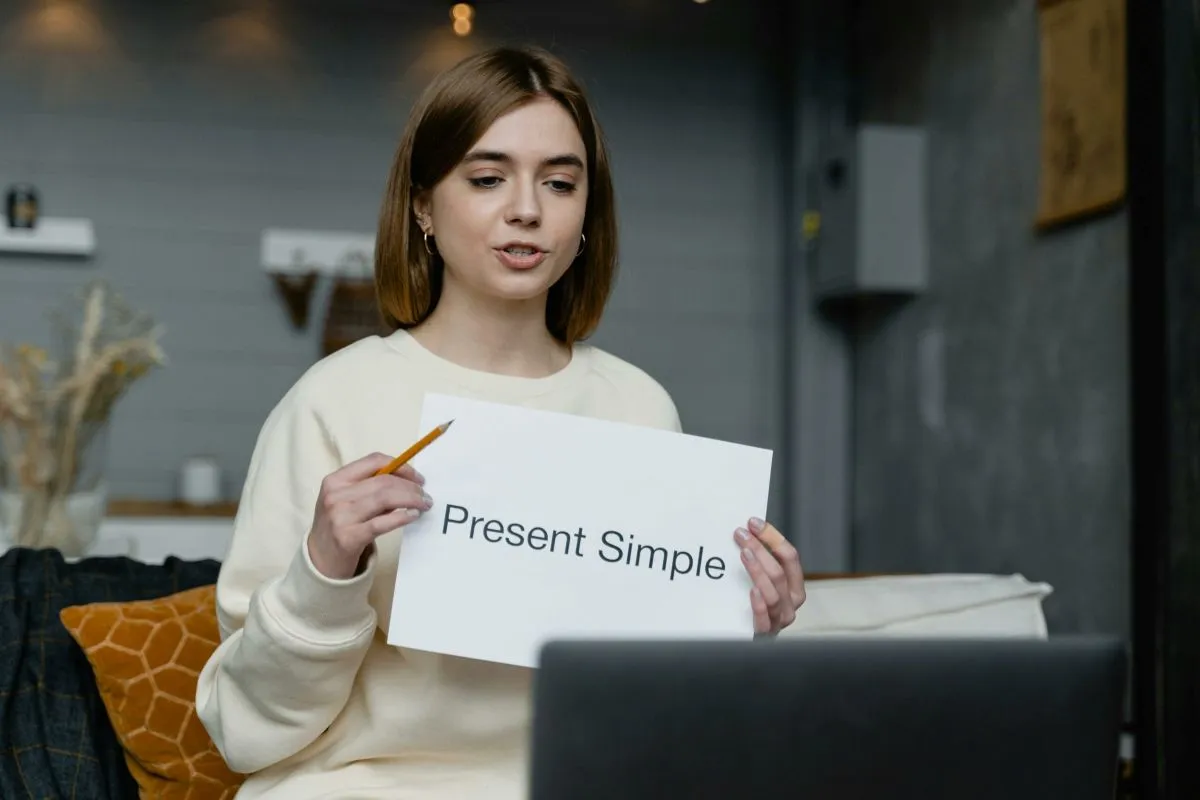
Present Tense
- Simple Present: Describes habitual actions, general truths, or facts.
Example: She writes every day. - Present Continuous: Describes actions happening right now or temporary actions.
Example: She is writing a letter now. - Present Perfect: Describes actions that happened at an unspecified time in the past or started in the past and continue to the present.
Example: She has written three letters so far. - Present Perfect Continuous: Describes actions that started in the past and continue to the present, emphasizing the duration.
Example: She has been writing for two hours.
Past Tense
- Simple Past: Describes actions that happened and were completed in the past.
Example: She wrote a letter yesterday. - Past Continuous: Describes actions that were ongoing at a specific time in the past.
Example: She was writing a letter when I called. - Past Perfect: Describes actions that were completed before another action in the past.
Example: She had written the letter before he arrived. - Past Perfect Continuous: Describes ongoing actions in the past up until another point in the past.
Example: She had been writing for an hour before he arrived.
Future Tense
- Simple Future: Describes actions that will happen in the future.
Example: She will write a letter tomorrow. - Future Continuous: Describes actions that will be ongoing at a specific time in the future.
Example: She will be writing a letter at 5 PM. - Future Perfect: Describes actions that will be completed before a certain point in the future.
Example: She will have written the letter by tomorrow. - Future Perfect Continuous: Describes actions that will be ongoing up until a specific time in the future.
Example: She will have been writing for two hours by the time he arrives.